





WeOmni

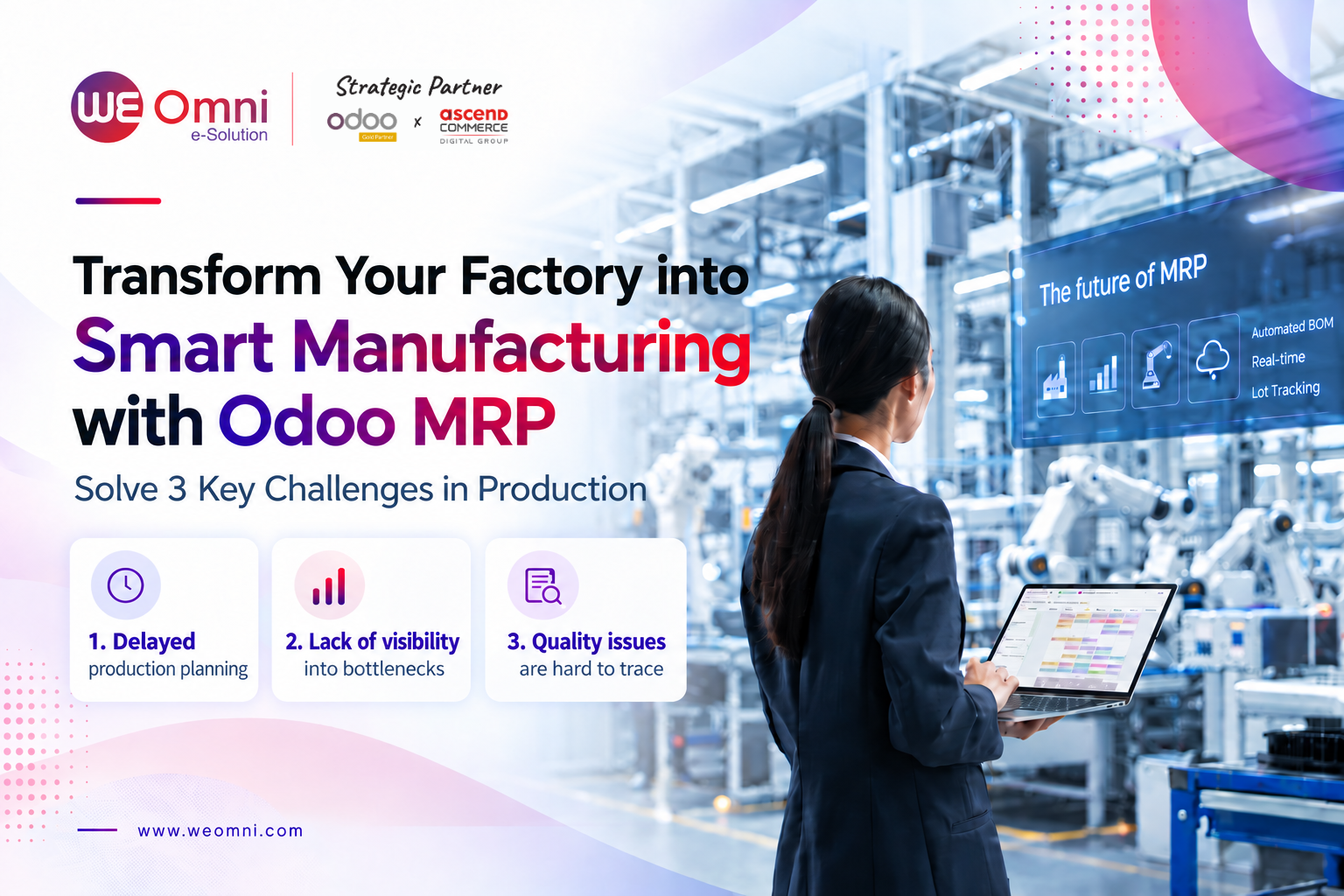
Solve 3 Common Production Challenges! Transform Your Factory into Smart Manufacturing with Odoo MRP

Rising costs, delayed deliveries, production waste, and budgets running over plan… If you are a factory executive or responsible for managing a production line, you have likely faced some of these challenges.

Today, Thailand’s manufacturing sector is facing increasingly complex challenges, including price competition, fluctuating raw material costs, and growing customer expectations for products that are “faster, but at a lower price.” However, many factories are still relying on manual processes such as:

  • Phantom Stock: Inventory numbers in the system never match the actual raw materials available on the shop floor.
  • Paper Work Orders: Documents are passed from person to person, increasing the risk of being lost or recorded incorrectly.
  • Countless Versions of Excel Files: Production planning relies on spreadsheets that are edited repeatedly until no one knows which version is the latest.

When production depends on “guesswork” or “the experience of shop floor workers,” operations can easily be disrupted if a key employee is absent or an Excel file has an issue. This can cause production lines to slow down immediately, resulting in longer lead times, higher hidden costs, and ultimately affecting business reliability.


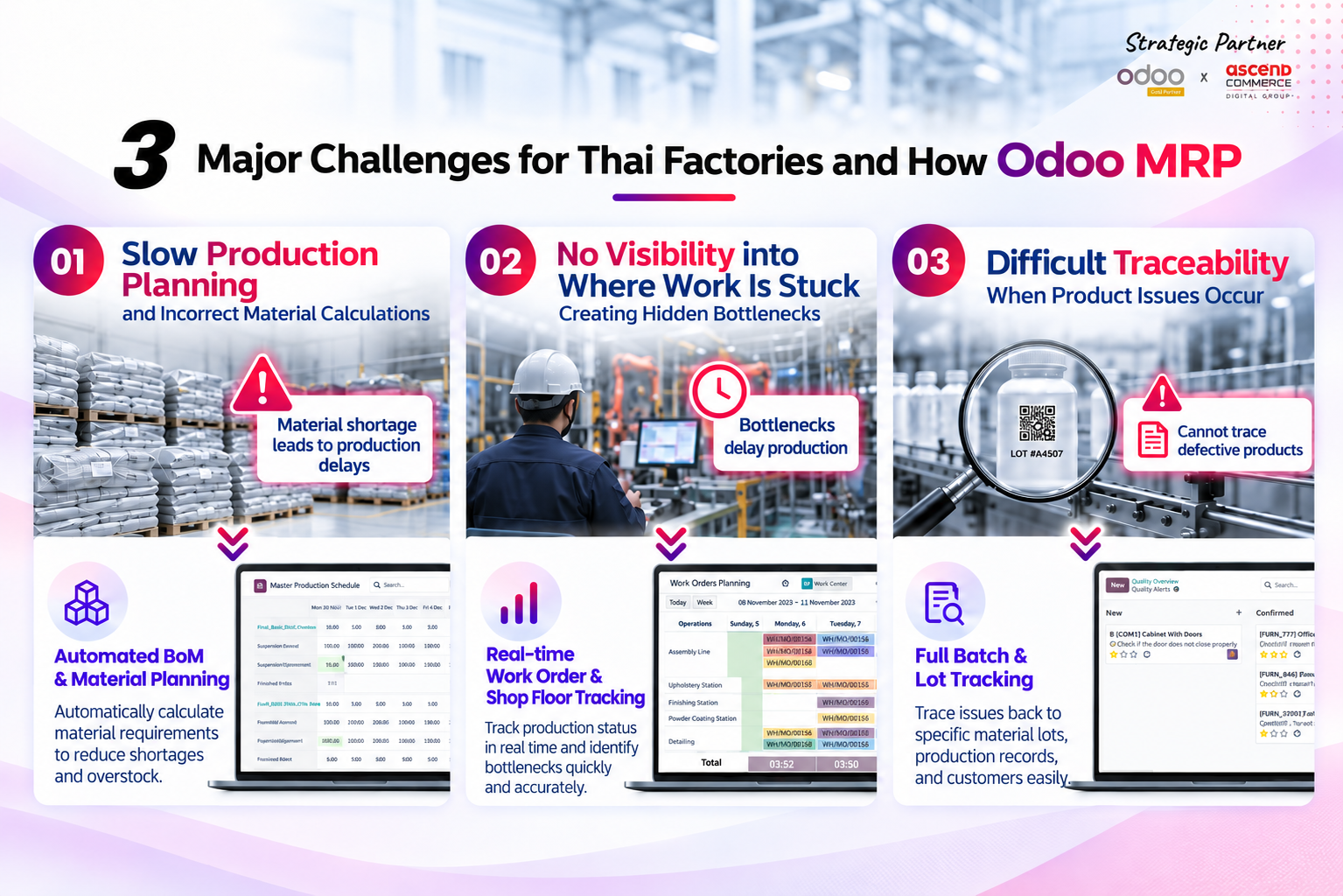
3 Major Challenges for Thai Factories and How Odoo MRP Helps Solve Them

From WeOmni’s experience as an Odoo Strategic Partner, supporting the transformation of multiple manufacturing businesses, these are three of the most common challenges we have seen—and how Odoo MRP can help address them directly:

1. Slow Production Planning and Incorrect Material Calculations

  • Use Automated BoM & Material Planning to automatically calculate the materials required based on orders. This helps prevent material shortages on the shop floor, one of the key causes of production delays. It also helps avoid purchasing excessive raw materials that tie up capital unnecessarily and may affect the company’s financial balance.

2. No Visibility into Where Work Is Stuck, Creating Hidden Bottlenecks

  • Make production status easier to track through Real-Time Work Order & Shop Floor Tracking, allowing supervisors and managers to immediately see the overall production status at every stage on a dashboard. They can identify which machine, work center, or process is creating a bottleneck and take corrective action quickly and accurately.

3. Difficult Traceability When Product Issues Occur

  • Full Batch & Lot Tracking allows businesses to trace issues back to the specific raw material lot, identify who produced the product, and see which customer received it. This supports international standards such as ISO and makes audit preparation easier, while helping reduce losses related to affected lots.
4 Highlight Features in Odoo MRP That Elevate Production to International Standards

What makes Odoo Manufacturing (MRP) different from traditional ERP systems is its ability to connect “raw materials – machines – employees – sales” within one integrated system through four key features:

1. Smart Multi-Level BoM

  • Define complex Bills of Materials (BoMs) and detailed production processes based on your business requirements. The system helps calculate Actual Cost more accurately. When a BoM is updated, the information is synchronized with Purchasing and Manufacturing, helping reduce communication errors.

2. Work Order Automation — Say Goodbye to Paper Work Orders

  • Employees can receive work assignments, record working time, and view drawings through tablets or touch screens directly on the shop floor. The system helps prioritize work based on due dates and automatically evaluates work center capacity.

3. End-to-End QC & Quality Control

  • Control quality from incoming raw material inspections through to finished products. This helps reduce defective production, and when a customer complaint occurs, teams can trace the root cause within just a few clicks.

4. Seamless Integration Between Sales and the Supply Chain

  • When the Sales team closes a deal in Odoo CRM, the system automatically checks inventory availability. If there is insufficient stock, the system can create a Manufacturing Order (MO) and immediately alert the Purchasing team. Information flows smoothly across departments without being missed.


Measurable Results After Implementing Odoo MRP

Operational Area

Before Odoo MRP

After Odoo MRP

Production Lead Time

Continuously extended and difficult to predict

Reduced by 20–30% through automated work prioritization

On-Time Delivery

Frequent delays due to material shortages

Significantly more accurate because planning is based on actual data

Cost of Goods Sold (COGS)

Difficult to control, with high hidden costs

Noticeably reduced by minimizing scrap and rework


Unlocking production bottlenecks starts with a system that understands how people actually work.

Every factory has different levels of complexity in its manufacturing processes. Therefore, there is no one-size-fits-all approach to implementing an MRP system.

The WeOmni team is ready to help you identify pain points on the shop floor, redesign workflows with Odoo MRP to reduce employees’ paperwork, and connect every department so that everyone works from the same view of information.

Backed by proven expertise: WeOmni — Thailand’s first and only Odoo Strategic Partner — is ready to help your factory move toward a more accurate and measurable manufacturing operation.

👉 Stop wasting time on phantom stock and complicated paperwork.

Talk to WeOmni’s Odoo experts at https://weomni.com/odoo/
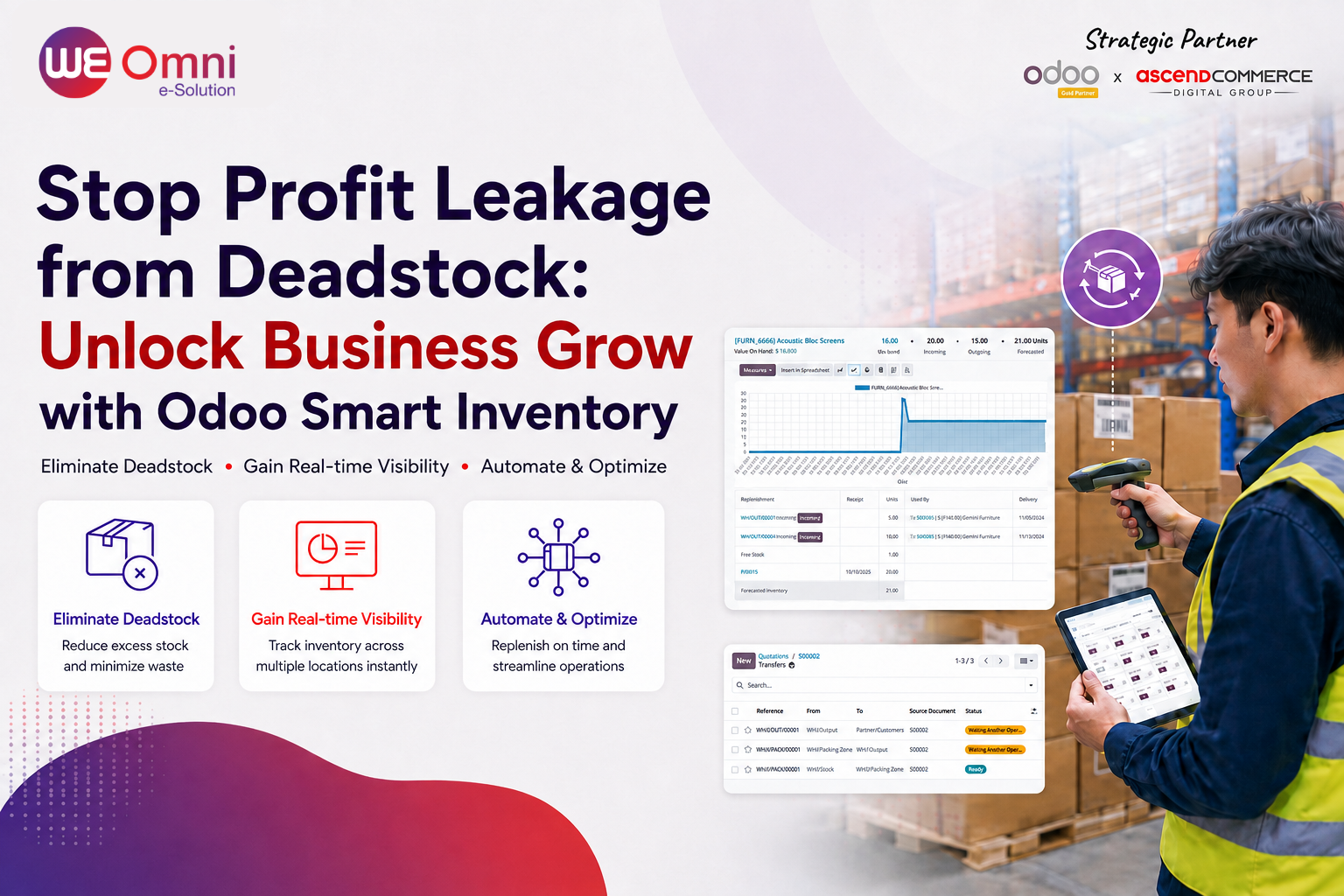
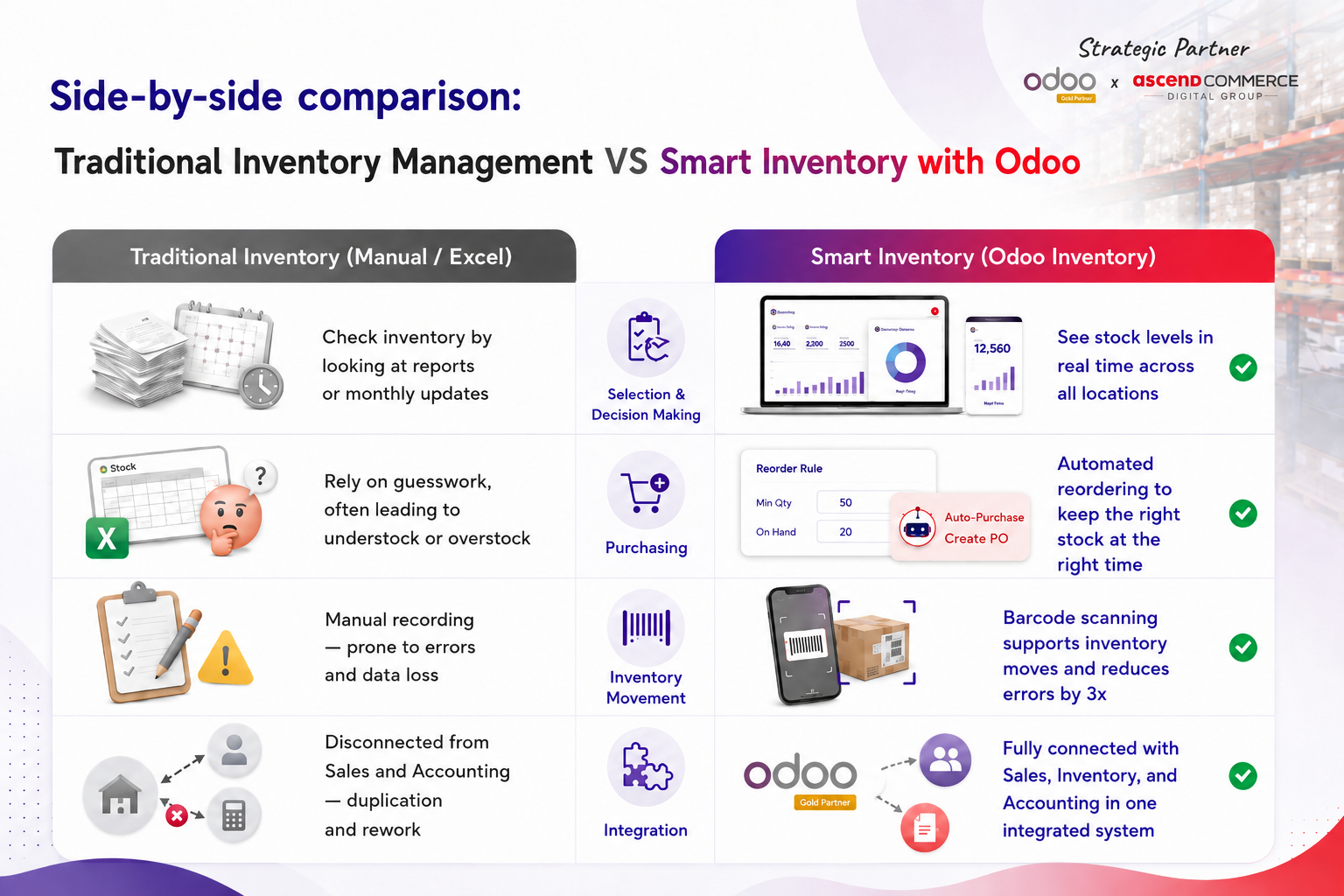
Stop Profit Leakage from Deadstock: Unlock Business Growth with Odoo Smart Inventory

Ever had products sell out at the store while excess stock sits in the warehouse until it expires? If this sounds familiar, your inventory may be quietly eating into your profit margins.

Today, WeOmni, an Odoo Strategic Partner, takes a closer look at what causes these inventory challenges—and the Odoo features that can help businesses reduce costs, improve efficiency, and manage inventory more effectively.

Did you know that many warehouses and retail businesses can lose as much as 15–20% of their profits every year due to inefficient inventory management?

One of the biggest challenges is finding the right balance. Too little inventory can lead to stockouts and lost sales opportunities, while ordering too much can turn valuable working capital into deadstock.

This makes excess inventory a silent drain on cash flow that can limit business growth.

The challenge becomes even greater when you operate multiple branches, warehouses, and sales channels. If your teams still rely heavily on Excel spreadsheets or manual records, it becomes increasingly difficult to know your true inventory position in real time.

Odoo officially supports real-time warehouse operations, barcode-based workflows, multi-warehouse management, automated replenishment, and integration with other business applications.

🛠️ 4 Strategic Pillars to Help Protect Your Profit with Odoo

Odoo Inventory is more than a system for recording products moving in and out of a warehouse.

When implemented effectively, it can become a strategic tool for protecting margins, improving working capital, and increasing operational efficiency.

Here are four key capabilities:

1. Gain Real-Time Inventory Visibility Across Every Location

Whether you operate a central warehouse, multiple stores, distribution centers, or several storage locations, Odoo allows your teams to see where products are located and how much inventory is available from a centralized system.

This helps reduce situations where sales teams promise products that are not actually available, while making inter-warehouse transfers easier to manage. Odoo also supports multi-warehouse operations, including transfers between warehouses and locations within the same system.

2. Improve Traceability with Lots & Serial Numbers

For businesses managing products that require detailed traceability, Odoo supports tracking through Lot Numbers and Serial Numbers.

This is particularly valuable for products with expiration dates, regulated goods, manufacturing components, or products requiring after-sales traceability. Odoo also supports inventory removal strategies such as FIFO (First In, First Out) and FEFO (First Expired, First Out) to help businesses determine which inventory should be picked first.

For businesses dealing with expiration-sensitive products, FEFO is especially useful because it prioritizes products based on their expiration dates.

3. Digitize Warehouse Operations with Barcode

Move away from paper-based warehouse processes. With Odoo Barcode, warehouse teams can use barcode scanners and compatible mobile devices to support day-to-day operations such as:

Receiving → Putaway → Picking → Transfers → Inventory Adjustments

This reduces repetitive manual data entry, helps prevent human error, and enables warehouse transactions to be updated directly in the system. Odoo Barcode supports inventory movements as well as lot and serial number scanning, helping teams improve both speed and traceability.

4. Optimize Working Capital and Reduce Excess Inventory

Inventory is not simply stock sitting on a shelf—it is working capital tied up in your operations. Odoo’s Reordering Rules allow businesses to define minimum and maximum inventory levels. When forecasted stock falls below a defined threshold, the system can trigger the appropriate replenishment process. For products using the Buy route, for example, Odoo can generate a Request for Quotation (RFQ) as part of the replenishment workflow.

This helps businesses maintain sufficient inventory to support customer demand while reducing unnecessary capital tied up in excess stock.


Build Smarter Inventory Operations with Odoo and WeOmni

Building an effective inventory system is not simply about implementing new software.

It requires redesigning the end-to-end operational workflow—from receiving and storage to picking, replenishment, and delivery—to match the way your business actually operates.

As an Odoo Strategic Partner in Thailand, WeOmni helps businesses design and implement Odoo Inventory as part of a connected business ecosystem—integrating inventory with Sales, Purchase, Accounting, and other critical business processes.

The objective is not only to improve warehouse efficiency, but also to reduce financial leakage, improve working capital visibility, and build a scalable foundation for sustainable growth.

“A high-performing warehouse is not one filled with the most inventory.
It is one that has the right products, in the right place, at the right time—and can turn inventory into cash as efficiently as possible.”

Ready to transform your inventory operations, reduce deadstock, and unlock more value from your working capital?

🌐 Talk to WeOmni today for an end-to-end consultation on ERP and Odoo Inventory implementation.  👉 https://weomni.com/odoo/

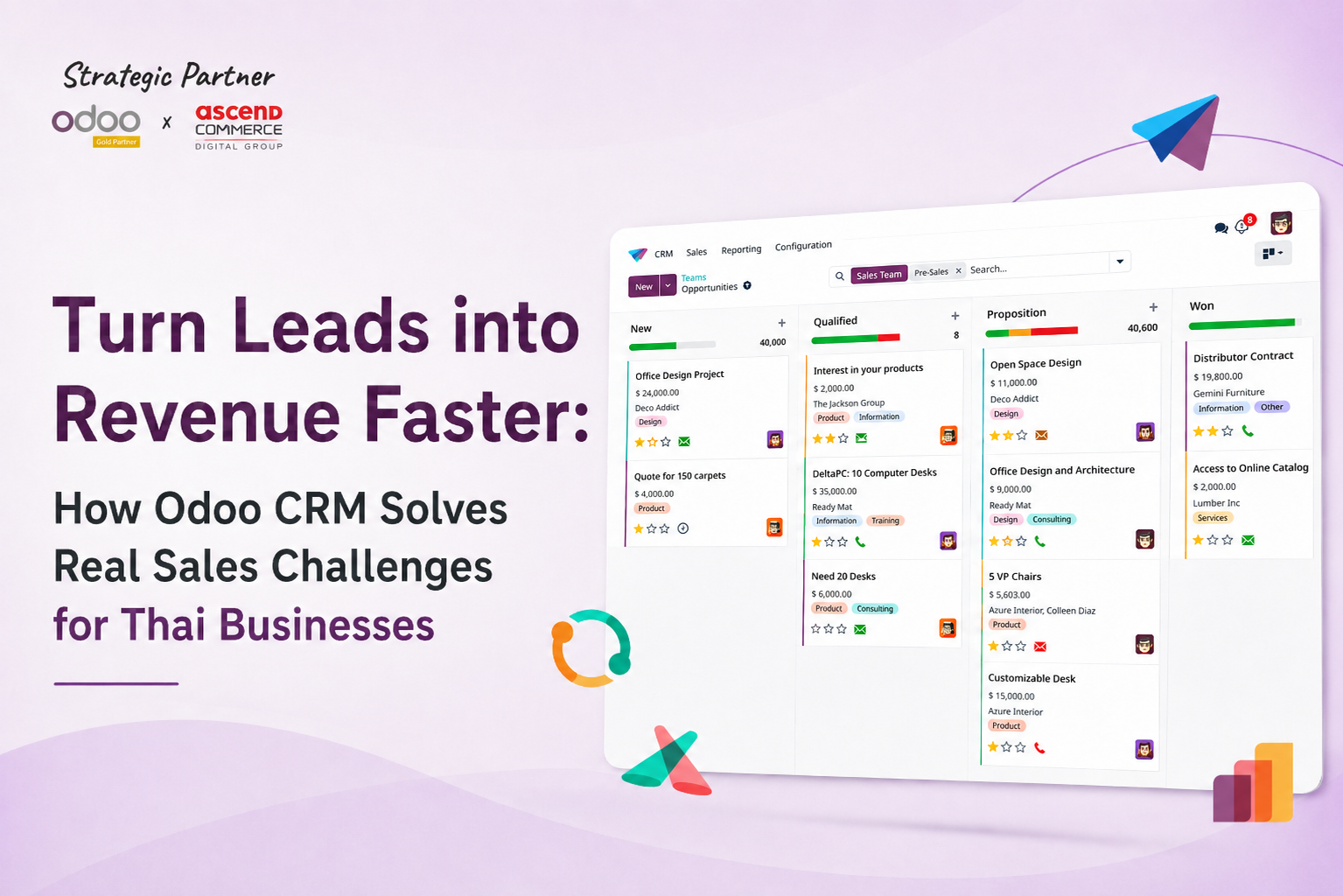
Turn Leads into Revenue Faster: How Odoo CRM Solves Real Sales Challenges for Thai Businesses

When speed and accuracy determine who wins, business growth depends on more than having talented salespeople. It requires a sales system that is ready to support growth.

A strong sales system does not leave each salesperson to work alone. It connects every stage of the workflow—from lead generation and follow-up to closing deals and issuing invoices—so that every sales opportunity can become sustainable revenue.

Imagine this: A potential customer contacts your business, and the system immediately assigns the lead to the right salesperson. The sales team knows exactly which customers to focus on today without searching through old conversations. At the same time, management can see the status of every deal in real time without waiting for the next sales meeting.

This is exactly what Odoo CRM is designed to support.

But before getting there, let us look at three major challenges that many sales teams in Thailand are facing today.

Behind the Challenges: 3 Common Problems for Sales Teams in Thailand

Based on our experience working with Thai enterprises and SMEs, many businesses are still trapped in traditional sales management methods without realizing it.

  1. Unclear priorities—salespeople do not know whom to follow up with first
    When new leads arrive from multiple channels, salespeople often struggle to identify which customers are genuinely interested and which are only asking for prices. As a result, the team may spend too much time on leads that are not ready to buy while high-value customers are left waiting and may eventually choose a competitor.
  2. Scattered information makes opportunities easy to lose
    Many sales teams still switch between LINE, Excel, email, and handwritten notes. Customer conversations and important information can easily be lost. When a salesperson is absent, leaves the company, or transfers an account to another team member, handing over the customer becomes immediately difficult.
  3. Management cannot see the complete sales picture
    Without real-time information, management cannot accurately forecast future sales. Leaders must wait for meetings or repeatedly ask the sales team for updates. This delays inventory planning, resource allocation, and growth strategies—allowing competitors to move faster.

Now Imagine a More Effective Way of Working

What would happen if your sales team could work like this?

  1. Respond quickly without making customers wait
    When a new lead contacts the business, the system immediately assigns the opportunity to the most suitable salesperson while the customer is still interested.
  2. Work with clear direction instead of guessing
    Salespeople know whom to call, which customers require follow-up, and which opportunities should receive priority today—without searching through old records.
  3. See the sales outlook in advance
    Management can clearly view the sales pipeline and forecast expected revenue without waiting for the next sales meeting.

All of this becomes possible when Odoo CRM serves as the central platform for managing your sales operations.

“Odoo CRM transforms sales teams from reactive teams waiting for customers to contact them into proactive teams that work with real business data.”

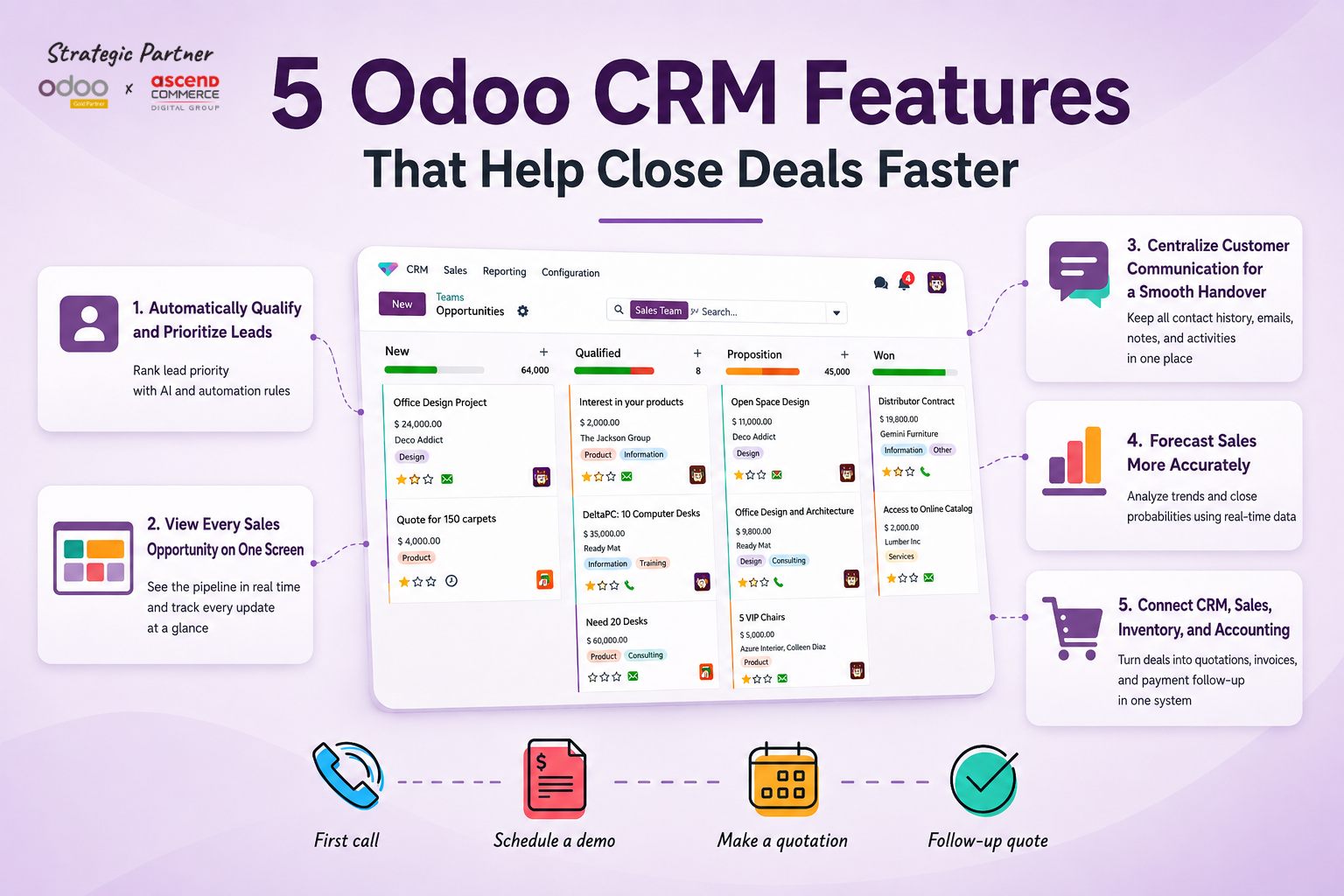
5 Odoo CRM Features Designed to Solve Sales Challenges

Odoo CRM provides practical capabilities that address common weaknesses in traditional sales processes.

1. Automatically Qualify and Prioritize Leads

Odoo can collect leads from website forms, email, and live chat and bring them into one central system, helping reduce the risk of missed opportunities. Its AI-powered predictive lead scoring capability uses historical CRM data to estimate the probability of winning each lead or opportunity. Leads can also be automatically assigned to the appropriate sales team or salesperson based on defined rules.

This helps salespeople prioritize the right customers, focus their time more effectively, and move opportunities toward closing without relying only on guesswork.

2. View Every Sales Opportunity on One Screen

Move away from sales information scattered across Excel files, LINE conversations, and individual notes. Odoo CRM provides a visual sales pipeline that displays the status of every opportunity in one place. Salespeople can update each opportunity by dragging and dropping it into the appropriate sales stage.

The pipeline can also be customized to match the actual sales workflow of your business. This gives the team greater visibility, reduces missed follow-ups, and helps ensure that opportunities continue moving forward.

3. Centralize Customer Communication for a Smooth Handover

Odoo keeps customer conversations, meeting notes, emails, internal updates, and related activities within each customer or opportunity record. This creates a clear history that the team can access whenever an account changes ownership or a new salesperson takes over.

Salespeople can also schedule next activities, such as calls, meetings, emails, and follow-ups. Automated reminders help ensure that important tasks are completed according to plan and that no customer is forgotten.

4. Forecast Sales More Accurately

Odoo CRM helps management overcome limited sales visibility by calculating expected revenue from opportunity values, expected closing dates, and probabilities of success. Forecast and pipeline reports provide a clearer view of upcoming opportunities and expected sales performance. Management can also review sales activities and team results through dashboards and reports.

This enables leaders to make strategic decisions based on current business data rather than delayed updates or assumptions.

5. Connect CRM, Sales, Inventory, and Accounting

One of Odoo’s key strengths is its integrated suite of business applications. When a customer is ready to proceed, the sales team can create a quotation directly from the opportunity, send it to the customer, and support online confirmation and electronic signatures. Once the quotation becomes a confirmed sales order, the connected workflow can continue delivery, inventory management, and invoicing based on the organization’s configured process.

This reduces manual handovers between departments, minimizes repeated data entry, and helps businesses move from opportunity to revenue more quickly.


Accelerate Business Growth and Build a Proactive Sales Team with WeOmni

Successful CRM implementation does not depend on software alone.

It requires a clear understanding of the organization’s sales processes, customer journey, operating model, and the way the sales team actually works.

As Thailand’s first Odoo Strategic Partner, WeOmni, under Ascend Commerce, brings certified expertise and implementation experience to help organizations design and deploy Odoo CRM around their real business workflows.

Our team can help configure Odoo CRM to support your sales process, improve adoption across the organization, and enable your sales team to use the platform effectively.

“A strong CRM is more than a system for storing customer names. It is a strategic platform that helps businesses turn leads into revenue faster.”

Is your business ready to accelerate sales performance, increase revenue, and build a stronger foundation for sustainable growth?

🌐 Speak with the WeOmni team today about implementing an integrated ERP and Odoo CRM solution.

👉 Click  https://weomni.com/odoo/  to learn more about Odoo CRM solutions by WeOmni.



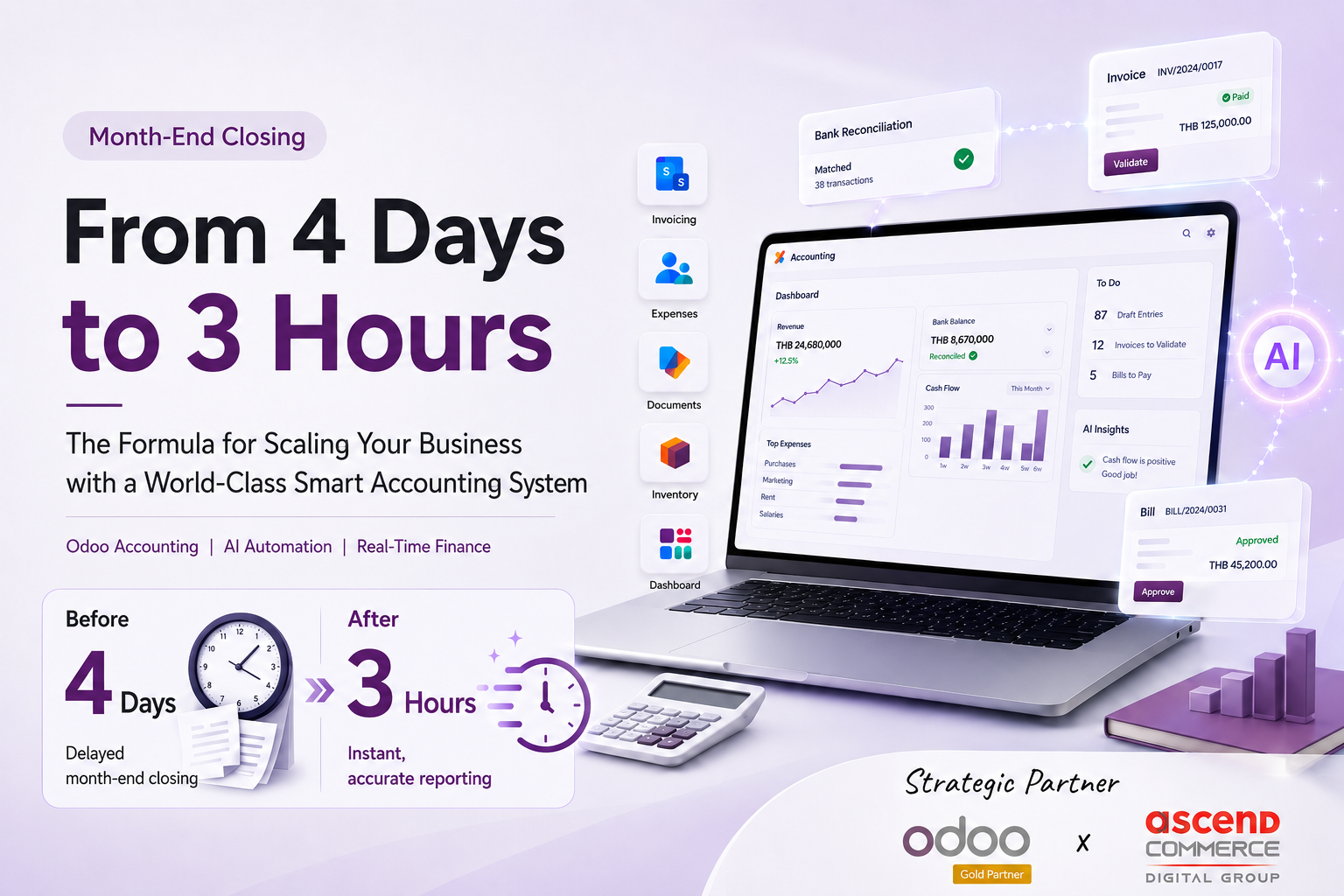
From 4 Days to 3 Hours: The Formula for Scaling Your Business with a World-Class Smart Accounting System

Month-end closing can be overwhelming—and no business should have to struggle with it every month.

Let’s look at how WeOmni, as an Odoo Strategic Partner, helps businesses solve this challenge.

The problem often begins with employees buried under piles of documents. They spend days checking payments, reviewing tax invoices, and entering the same information across point-of-sale, inventory, and accounting systems.

By the time management finally receives the financial statements needed for business planning, a large part of the new month has already passed.

In today’s business world, speed is one of the most important competitive advantages. However, many growing organizations are held back because their back-office systems cannot keep up.

Financial closing and invoice processing that take several days can become major bottlenecks, slowing down the entire business.

🚨 Are You Seeing These Warning Signs?

  • [ ] You have to wait until the middle of the following month to see the actual profit and loss figures.
  • [ ] Your team spends most of its time entering the same sales information again in the accounting system.
  • [ ] Inventory figures do not match the accounting records, forcing the team to spend hours finding the differences during every month-end closing.

Even if you checked only one box, it may be a sign that your back-office system is starting to reach its limits.

When these problems are left unresolved, they can become major barriers to business growth.

What if the entire process could be reduced to only three hours?

A faster accounting system is not only about making work easier for employees. It is also about improving the speed of decision-making.

When financial information is available sooner, business owners and senior management can clearly see the company’s cash flow, understand potential risks, and act on new opportunities before their competitors.


When the Business Grows but the Accounting System Falls Behind

As a business grows—whether by opening more branches, adding new product lines, or entering international markets—its financial operations become more complex.

Traditional accounting systems may no longer be able to handle the growing amount of information.

Sales data may not match inventory records. Purchase information may not match payment figures. In the end, the accounting team has to manually check and process everything themselves.

This is the turning point when modern organizations begin using Odoo Accounting to remove these limitations.

Odoo helps transform accounting from one of the slowest parts of the business into a strong foundation that can support future growth.

It does this through three main strengths:

  • All Financial Information in One Platform: There is no need to move information between separate systems. This reduces repeated work and lowers the risk of human error.

  • AI and Automation: The system can handle repetitive tasks such as reading receipts, recording document information, and matching bank transactions.

  • Flexible and Ready to Grow: Odoo can adjust and expand as the business becomes larger and more complex.


💡 The Speed Formula: How Can Four Days Become Three Hours?

The answer is to move from manual work to automation and remove unnecessary repeated steps.

  • The Traditional Process: Four Full Days: Accounting teams may spend three to four days entering information from paper documents one by one. They must download bank statements, open Excel files, compare transactions, and complete bank reconciliation manually. This process is slow, takes a great deal of effort, and has a high risk of errors.
  • The Odoo Process: Only Three Hours: With AI, automation, and real-time data connections, many time-consuming tasks can be completed automatically.The accounting team mainly needs to review the information and click Confirm through the dashboard. Tasks that previously took several days can therefore be completed within only a few hours.

Five Key Odoo Accounting Features That Can Speed Up Your Back-Office Operations

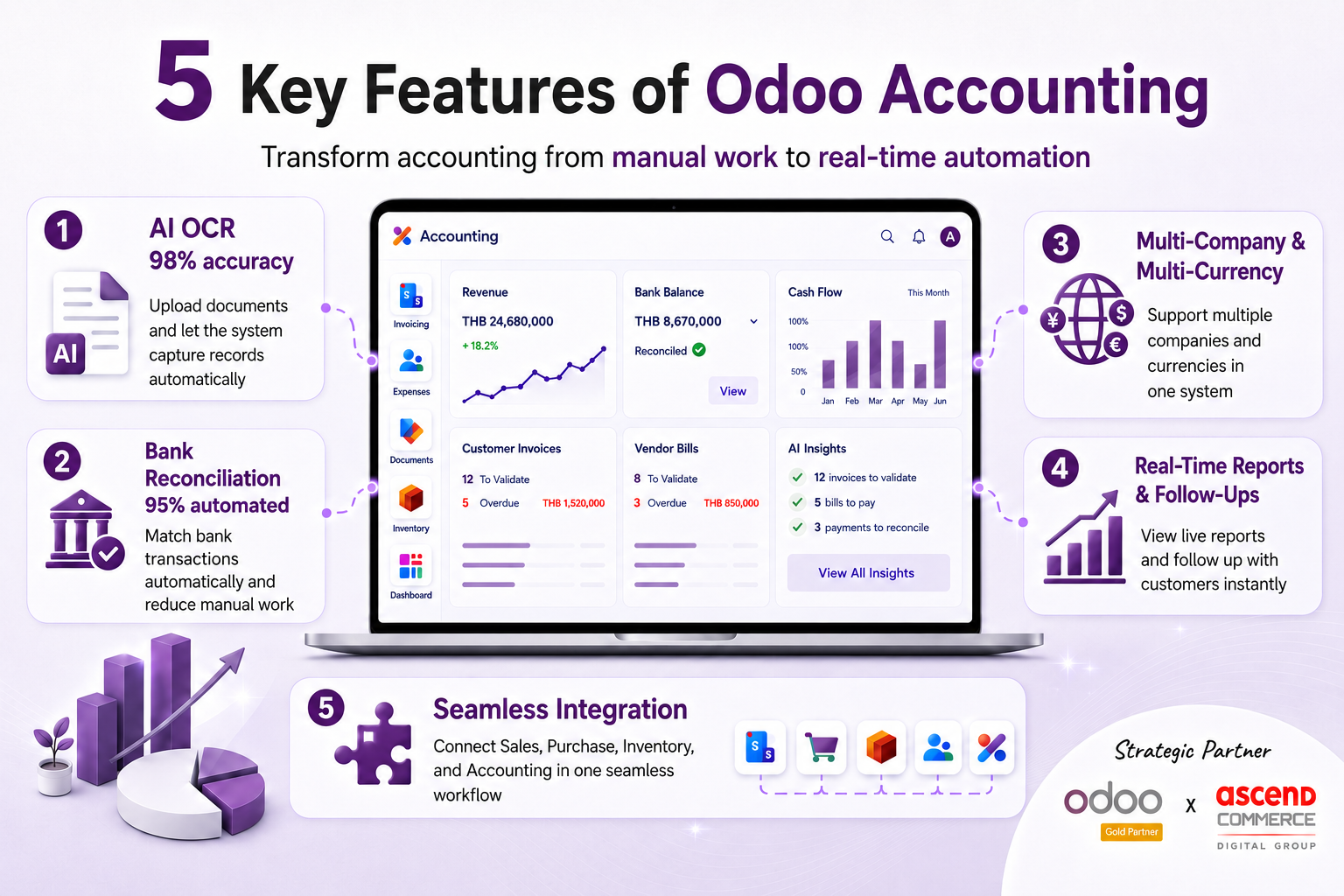
1. Let AI Enter Bill Information—You Only Need to Confirm It

Up to 98% Recognition Accuracy: Say goodbye to entering information from documents one by one. Odoo uses advanced document-reading technology to capture information with up to 98% recognition accuracy. Simply upload a document or take a photo of a receipt, and the system will automatically read and record the information. This helps reduce processing time and hidden operating costs.

It also allows the accounting team to move beyond basic data entry and focus more on cost analysis, finding savings, and supporting better business decisions.

2. Connect with Banks Worldwide and Automatically Match Transactions

Smart Bank Reconciliation: There is no need to download bank statements and compare every transaction manually. Odoo supports connections with more than 28,000 banks worldwide and can automatically match up to 95% of transactions. This helps management check daily cash flow more quickly and identify unusual transactions or financial gaps in real time.

The accounting team can focus on reviewing the small number of transactions that still require attention.

3. Expand Internationally with Confidence

Multi-Currency and Multi-Company Management: Odoo allows businesses to manage several companies and multiple currencies within the same system. It also supports flexible tax settings that can adjust to different countries and cross-border transactions.

This makes it easier to open new branches or expand into international markets without replacing the entire accounting system.

4. View Real-Time Reports and Automatically Follow Up on Payments

Real-Time Reporting and Automated Follow-Ups: Management no longer needs to wait until the end of the month to see the latest financial information. Odoo allows users to view financial reports in real time, whenever they need them. The system can also identify overdue payments and automatically send reminders based on a set schedule.

This helps improve cash flow, collect payments faster, and reduce the risk of unpaid invoices becoming bad debt.

5. Connect Every Department in One System

Seamless Business Operations: Odoo Accounting works as a central system that connects with other departments in real time. For example, when a sale or purchase takes place, the system can automatically create the related invoice. When inventory moves, the related cost information can also be recorded in the financial system.

This removes the problem of disconnected information, often known as data silos. Every team can work with the same set of numbers, helping the business operate with greater transparency, accuracy, and control.


Move Toward Global Standards with Odoo and WeOmni

Successfully implementing a world-class ERP and accounting system depends on more than the software alone. It also requires the right experience and knowledge to design the system around the organization’s actual business processes.

This is especially important in Thailand, where businesses must follow specific requirements related to VAT, withholding tax, e-Tax Invoice, and e-Receipt regulations from the Thai Revenue Department.

WeOmni by Ascend Commerce Digital Group has developed a localization package designed specifically for Thai businesses. This package helps a global ERP system work smoothly with Thai accounting, tax, and legal requirements.


🏆 Thailand’s First and Only Odoo Strategic Partner

WeOmni is Thailand’s first and only Odoo Strategic Partner—the highest level of partnership directly trusted by Odoo Headquarters.

Our capabilities are supported by a fully certified team with strong experience in both business processes and system implementation.

We do more than install technology.
We deeply understand the business, financial, and accounting processes of Thai organizations.

This allows us to design systems that meet real operational needs while supporting long-term business growth. A good accounting system should not only record what happened in the past. It should provide real-time information that helps drive the future of the business.

Is your organization ready to transform its accounting and financial operations into a more efficient system that can support rapid growth?

🌐 Contact us today for strategic consultation and end-to-end Odoo ERP and Accounting implementation services: https://weomni.com/odoo/

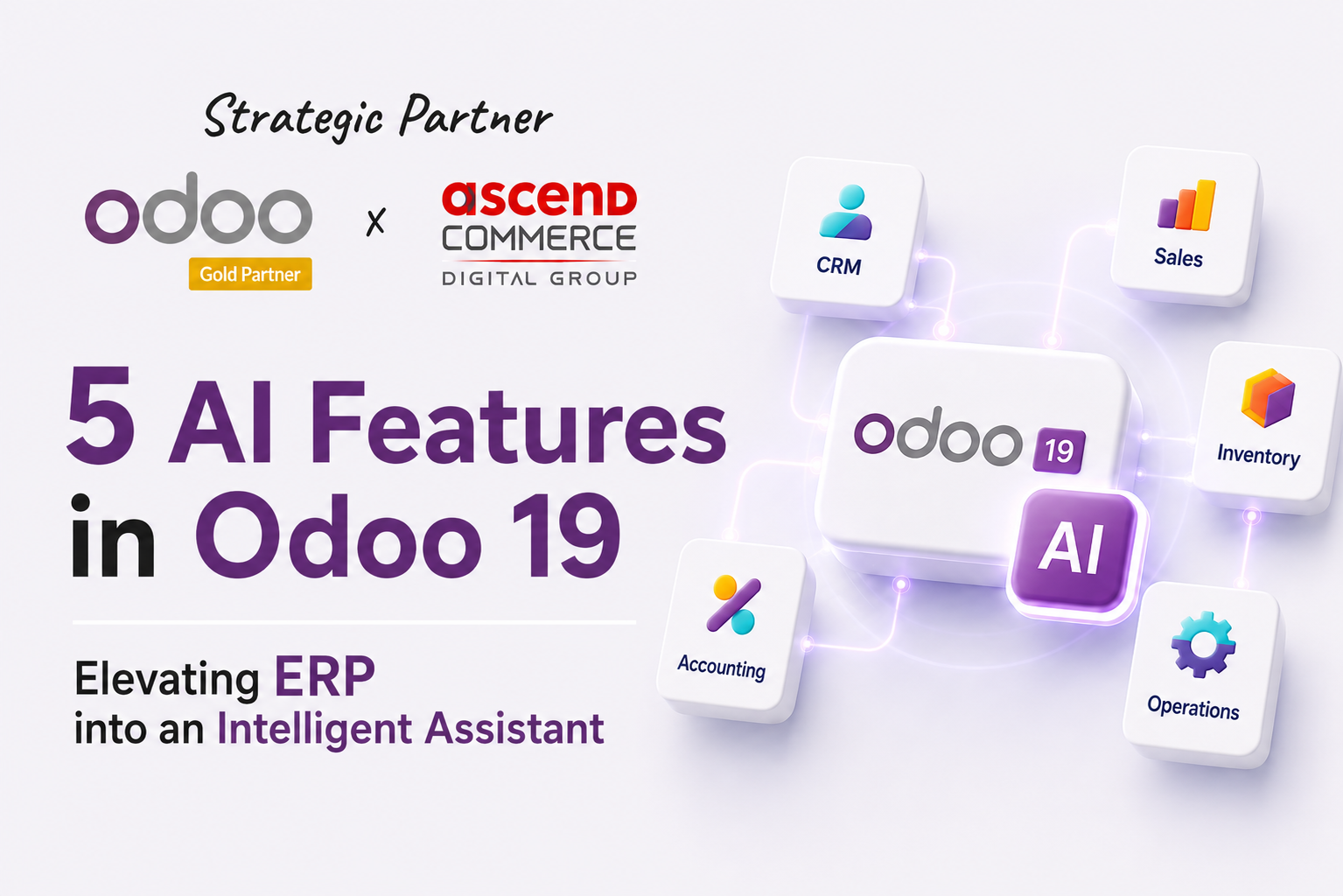
5 AI Features in Odoo 19: Elevating ERP into an Intelligent Assistant

Have you ever experienced this situation? A customer sends a simple question, but your team has to switch between multiple screens just to find the answer. They open Excel to check sales figures, go into the ERP system to verify stock, search emails for supplier agreements, and open the accounting system to check payment status. By the time they are ready to respond to the customer, a lot of time has already passed.

In the business world, the larger an organization grows, the more data it has. But the real challenge is not “not having enough data.” It is that “data is scattered.” Each team stores information separately, creating a hidden trap known as “system silos.”

This behavior of constantly switching between multiple systems is called context switching. It does not only waste employees’ time and create duplicated work, but also slows down customer response and business decision-making. A large amount of data remains buried in systems without being connected, eventually becoming dark data — unused and wasted information.

AI in Odoo 19: An Assistant That Connects Systems, Not Just Another Chatbot

This is why AI in Odoo 19 has been developed specifically to break down these barriers. AI in Odoo 19 is designed as an intelligent assistant embedded across different applications in the system (AI Agents / Ask AI). It works on a shared database to help suggest directions and prepare workflows for users to review and approve (AI Agent), all operating on the same unified database.

When AI understands the overall context of the organization, it can help transform traditional ways of working through three key pillars:

  • Instant data access: Bringing information from sales, accounting, and inventory into one unified view.
  • Reducing repetitive work: Managing routine processes so teams can focus more on value-creating work.
  • Turning data into answers: Transforming ERP from a document repository into a precise analytical assistant.

A Closer Look at 5 AI Capabilities in Odoo 19 That Can Transform Your Organization

To make the picture clearer, here are five AI capabilities on Odoo 19’s All-in-One system that can help solve disconnected workflows and make operations more seamless:

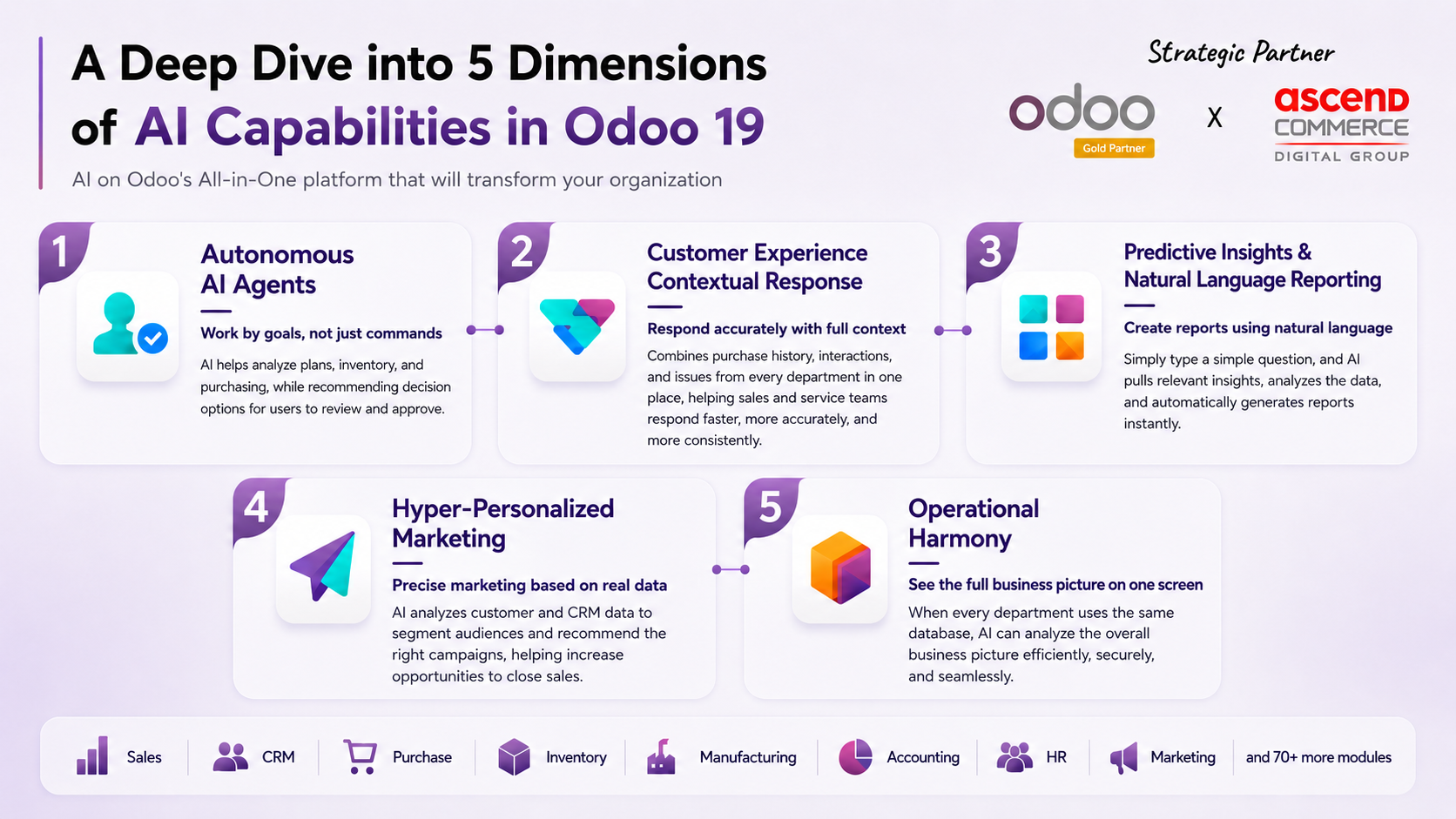
1. Autonomous AI Agents 

AI in Odoo 19 can help analyze data and suggest operational actions. For example, when the goal is to reduce overstocked inventory, the system may summarize sales data and purchase history, then propose operational steps or stock replenishment actions for users to review and approve.

2. Customer Experience Contextual Response

No more switching between multiple systems to search for customer history. AI helps consolidate purchase history, communication records, and issue reports from every department into a single screen. This allows sales and service teams to answer customer questions immediately, accurately, and continuously.

3. Predictive Insights & Natural Language Reporting

Executives no longer need to wait for summary reports from the IT team or manually build dashboards in Excel. They can simply type a question such as, “Which product category has the highest profit this month?” AI will pull data across modules, process it, and generate a report instantly.

4. Hyper-Personalized Marketing

When sales and CRM data are connected, AI in Odoo 19 can help analyze customer behavior and segment target audiences. It can then recommend suitable campaigns or promotions for each group, helping reduce guesswork and increase sales opportunities. However, the results depend on data quality, system configuration, and the training of models or marketing rules defined by the organization.

5. Operational Harmony

The greatest strength lies in how Odoo connects every department — Accounting, Sales, Inventory, HR, and more — on one shared database. When data is no longer scattered, AI can analyze cross-departmental impacts more effectively and securely, without the risk of exposing organizational data to external public AI platforms.


Moving into a New Era of Business with Odoo 19 and WeOmni

Successfully adopting AI and ERP does not depend on technology alone. It also depends on a deep understanding of business context, especially in Thailand, where there are specific requirements such as tax structures, e-Tax Invoice, and VAT systems aligned with the Revenue Department’s standards.

WeOmni by Ascend Commerce Digital Group, as the first and only officially certified Odoo Strategic Partner (Gold Partner) in Thailand, is ready to help you unlock the potential of Odoo 19 AI. Our team truly understands the workflows of Thai businesses and is ready to provide long-term support, early updates on new features, and system optimization that best fits your organization.

AI is not here to replace your people. It is here to reduce time spent on repetitive tasks and turn scattered data into “answers,” so your team can focus on truly growing the business.

Are you ready to make your business smarter and more advanced with Odoo AI?

🌐 Contact WeOmni to receive expert consultation on end-to-end ERP implementation and AI Integration at https://weomni.com/odoo/