Month-end closing can be overwhelming—and no business should have to struggle with it every month.
Let’s look at how WeOmni, as an Odoo Strategic Partner, helps businesses solve this challenge.
The problem often begins with employees buried under piles of documents. They spend days checking payments, reviewing tax invoices, and entering the same information across point-of-sale, inventory, and accounting systems.
By the time management finally receives the financial statements needed for business planning, a large part of the new month has already passed.
In today’s business world, speed is one of the most important competitive advantages. However, many growing organizations are held back because their back-office systems cannot keep up.
Financial closing and invoice processing that take several days can become major bottlenecks, slowing down the entire business.
🚨 Are You Seeing These Warning Signs?
- [ ] You have to wait until the middle of the following month to see the actual profit and loss figures.
- [ ] Your team spends most of its time entering the same sales information again in the accounting system.
- [ ] Inventory figures do not match the accounting records, forcing the team to spend hours finding the differences during every month-end closing.
Even if you checked only one box, it may be a sign that your back-office system is starting to reach its limits.
When these problems are left unresolved, they can become major barriers to business growth.
What if the entire process could be reduced to only three hours?
A faster accounting system is not only about making work easier for employees. It is also about improving the speed of decision-making.
When financial information is available sooner, business owners and senior management can clearly see the company’s cash flow, understand potential risks, and act on new opportunities before their competitors.
When the Business Grows but the Accounting System Falls Behind
As a business grows—whether by opening more branches, adding new product lines, or entering international markets—its financial operations become more complex.
Traditional accounting systems may no longer be able to handle the growing amount of information.
Sales data may not match inventory records. Purchase information may not match payment figures. In the end, the accounting team has to manually check and process everything themselves.
This is the turning point when modern organizations begin using Odoo Accounting to remove these limitations.
Odoo helps transform accounting from one of the slowest parts of the business into a strong foundation that can support future growth.
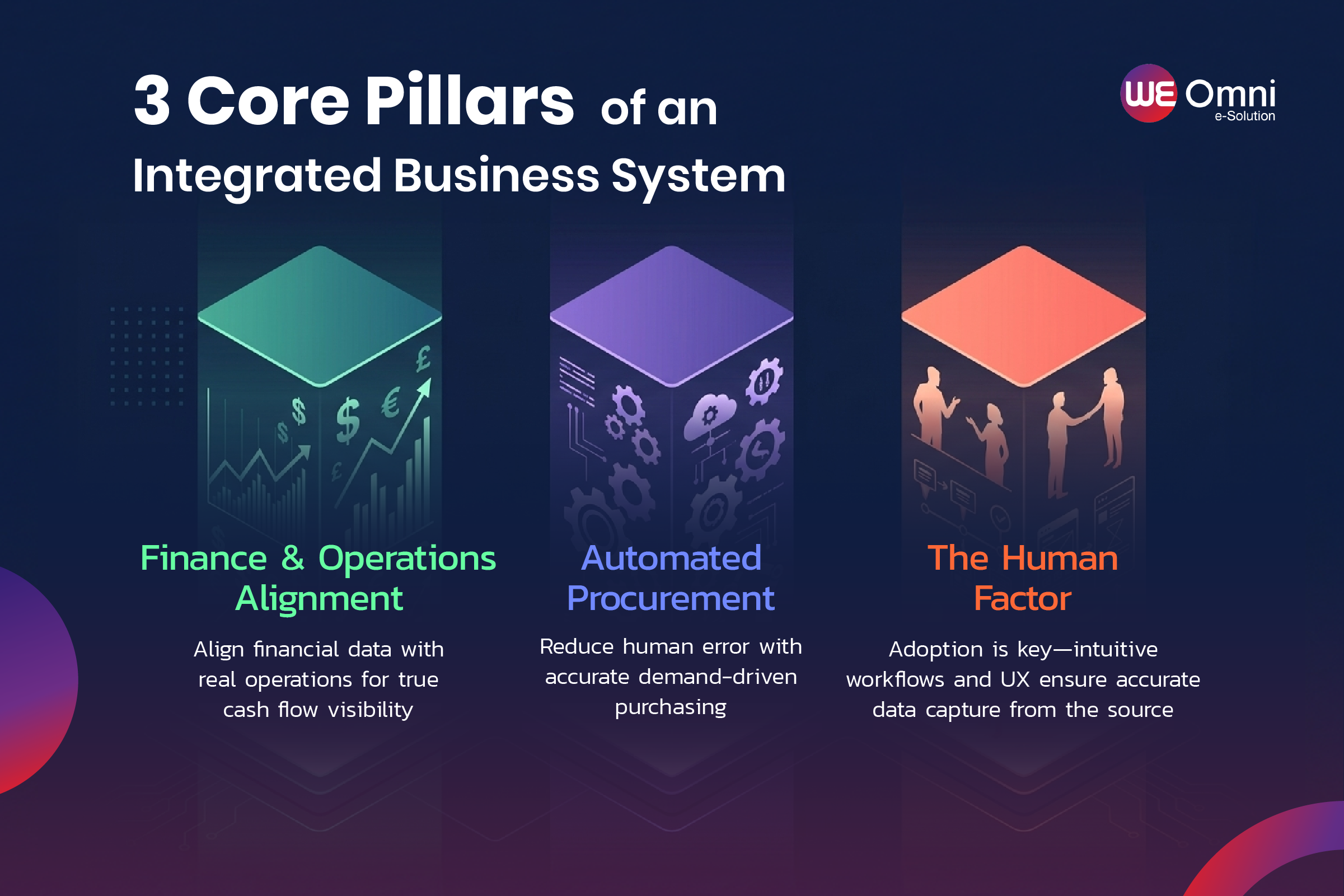
It does this through three main strengths:
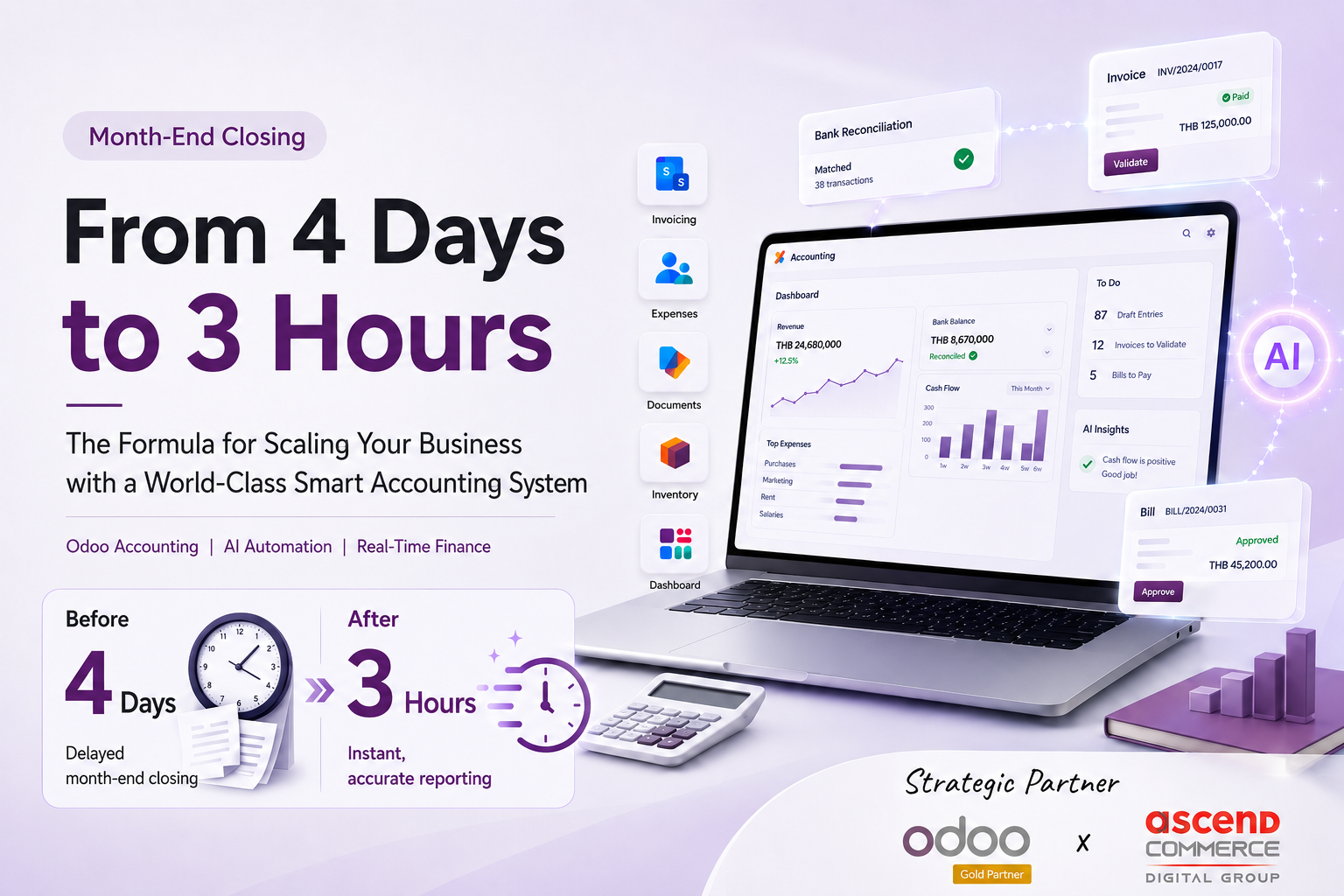
💡 The Speed Formula: How Can Four Days Become Three Hours?
The answer is to move from manual work to automation and remove unnecessary repeated steps.
- The Traditional Process: Four Full Days: Accounting teams may spend three to four days entering information from paper documents one by one. They must download bank statements, open Excel files, compare transactions, and complete bank reconciliation manually. This process is slow, takes a great deal of effort, and has a high risk of errors.
The Odoo Process: Only Three Hours: With AI, automation, and real-time data connections, many time-consuming tasks can be completed automatically.The accounting team mainly needs to review the information and click Confirm through the dashboard. Tasks that previously took several days can therefore be completed within only a few hours.
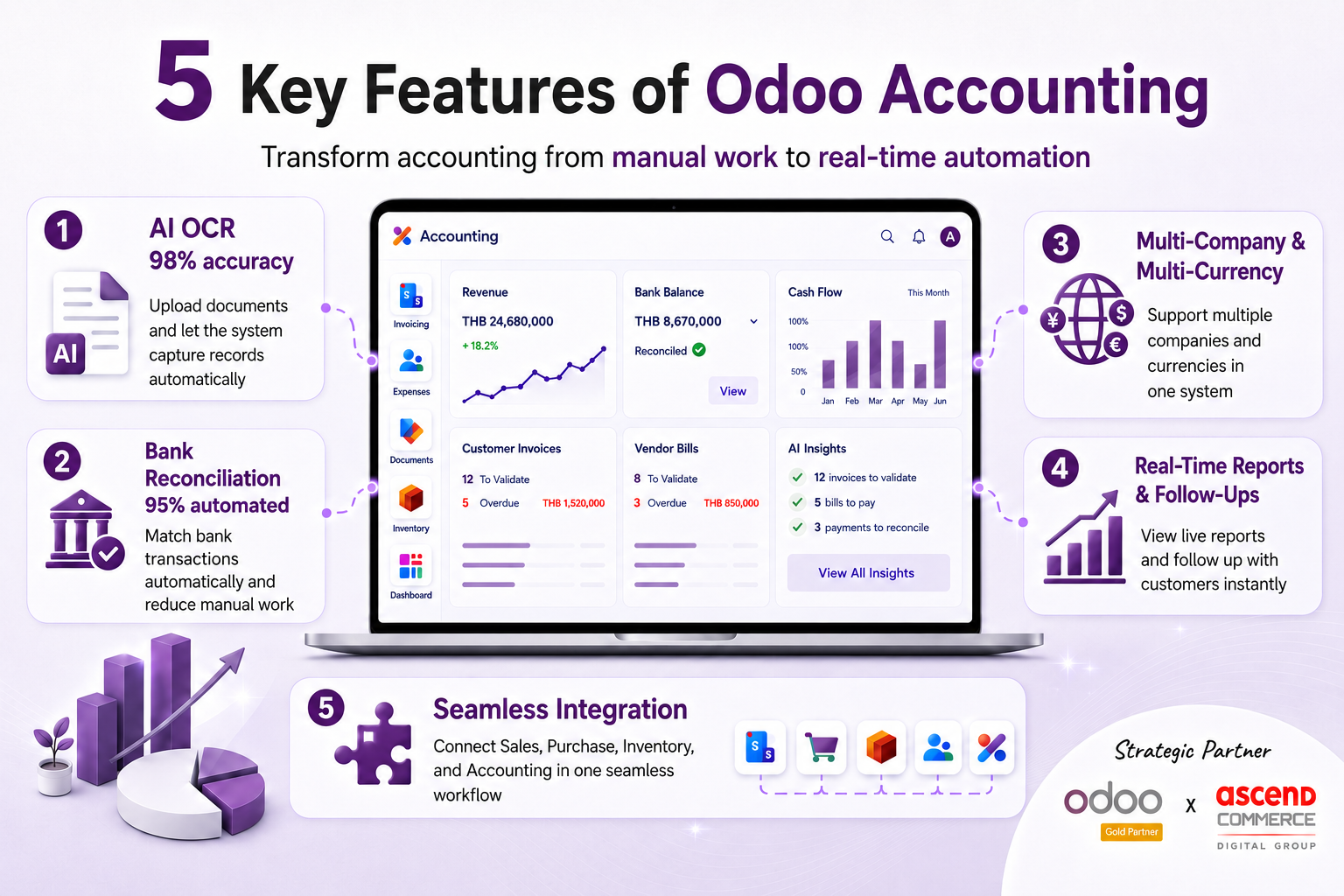
Five Key Odoo Accounting Features That Can Speed Up Your Back-Office Operations
1. Let AI Enter Bill Information—You Only Need to Confirm It
Up to 98% Recognition Accuracy: Say goodbye to entering information from documents one by one. Odoo uses advanced document-reading technology to capture information with up to 98% recognition accuracy. Simply upload a document or take a photo of a receipt, and the system will automatically read and record the information. This helps reduce processing time and hidden operating costs.
It also allows the accounting team to move beyond basic data entry and focus more on cost analysis, finding savings, and supporting better business decisions.
2. Connect with Banks Worldwide and Automatically Match Transactions
Smart Bank Reconciliation: There is no need to download bank statements and compare every transaction manually. Odoo supports connections with more than 28,000 banks worldwide and can automatically match up to 95% of transactions. This helps management check daily cash flow more quickly and identify unusual transactions or financial gaps in real time.
The accounting team can focus on reviewing the small number of transactions that still require attention.
3. Expand Internationally with Confidence
Multi-Currency and Multi-Company Management: Odoo allows businesses to manage several companies and multiple currencies within the same system. It also supports flexible tax settings that can adjust to different countries and cross-border transactions.
This makes it easier to open new branches or expand into international markets without replacing the entire accounting system.
4. View Real-Time Reports and Automatically Follow Up on Payments
Real-Time Reporting and Automated Follow-Ups: Management no longer needs to wait until the end of the month to see the latest financial information. Odoo allows users to view financial reports in real time, whenever they need them. The system can also identify overdue payments and automatically send reminders based on a set schedule.
This helps improve cash flow, collect payments faster, and reduce the risk of unpaid invoices becoming bad debt.
5. Connect Every Department in One System
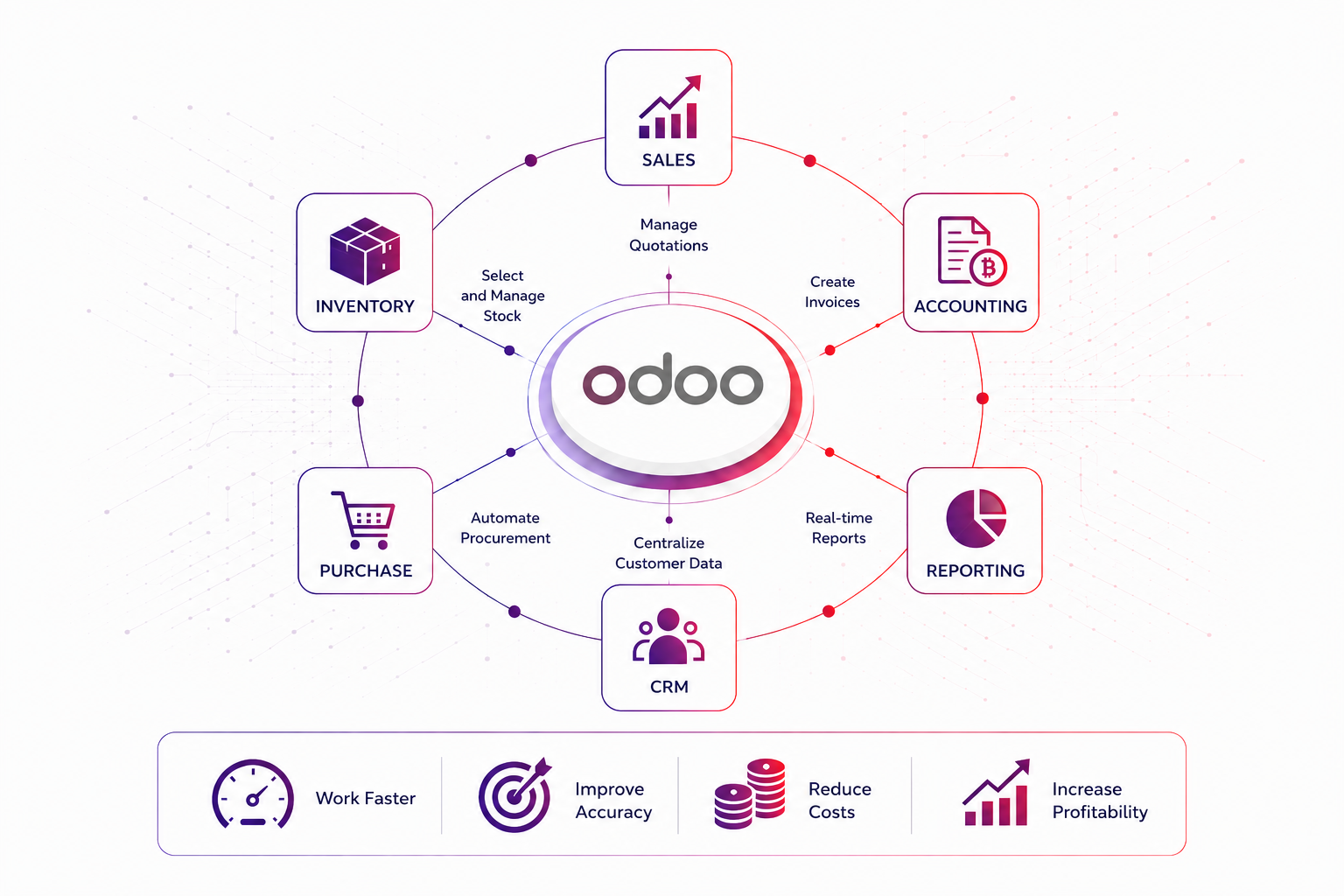
Seamless Business Operations: Odoo Accounting works as a central system that connects with other departments in real time. For example, when a sale or purchase takes place, the system can automatically create the related invoice. When inventory moves, the related cost information can also be recorded in the financial system.
This removes the problem of disconnected information, often known as data silos. Every team can work with the same set of numbers, helping the business operate with greater transparency, accuracy, and control.
Move Toward Global Standards with Odoo and WeOmni
Successfully implementing a world-class ERP and accounting system depends on more than the software alone. It also requires the right experience and knowledge to design the system around the organization’s actual business processes.
This is especially important in Thailand, where businesses must follow specific requirements related to VAT, withholding tax, e-Tax Invoice, and e-Receipt regulations from the Thai Revenue Department.
WeOmni by Ascend Commerce Digital Group has developed a localization package designed specifically for Thai businesses. This package helps a global ERP system work smoothly with Thai accounting, tax, and legal requirements.
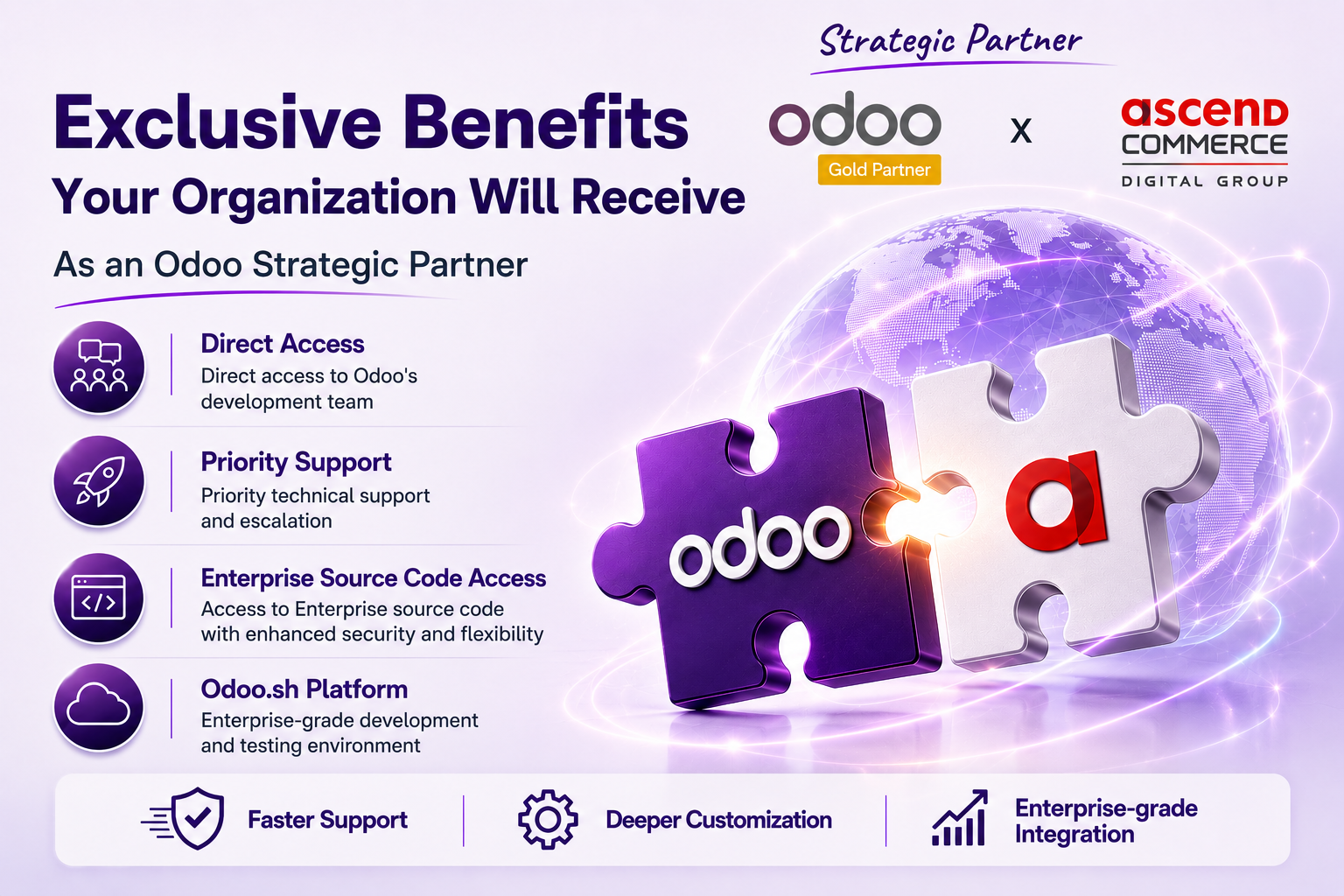
🏆 Thailand’s First and Only Odoo Strategic Partner
WeOmni is Thailand’s first and only Odoo Strategic Partner—the highest level of partnership directly trusted by Odoo Headquarters.
Our capabilities are supported by a fully certified team with strong experience in both business processes and system implementation.
We do more than install technology.
We deeply understand the business, financial, and accounting processes of Thai organizations.
This allows us to design systems that meet real operational needs while supporting long-term business growth. A good accounting system should not only record what happened in the past. It should provide real-time information that helps drive the future of the business.
Is your organization ready to transform its accounting and financial operations into a more efficient system that can support rapid growth?
🌐 Contact us today for strategic consultation and end-to-end Odoo ERP and Accounting implementation services: https://weomni.com/odoo/







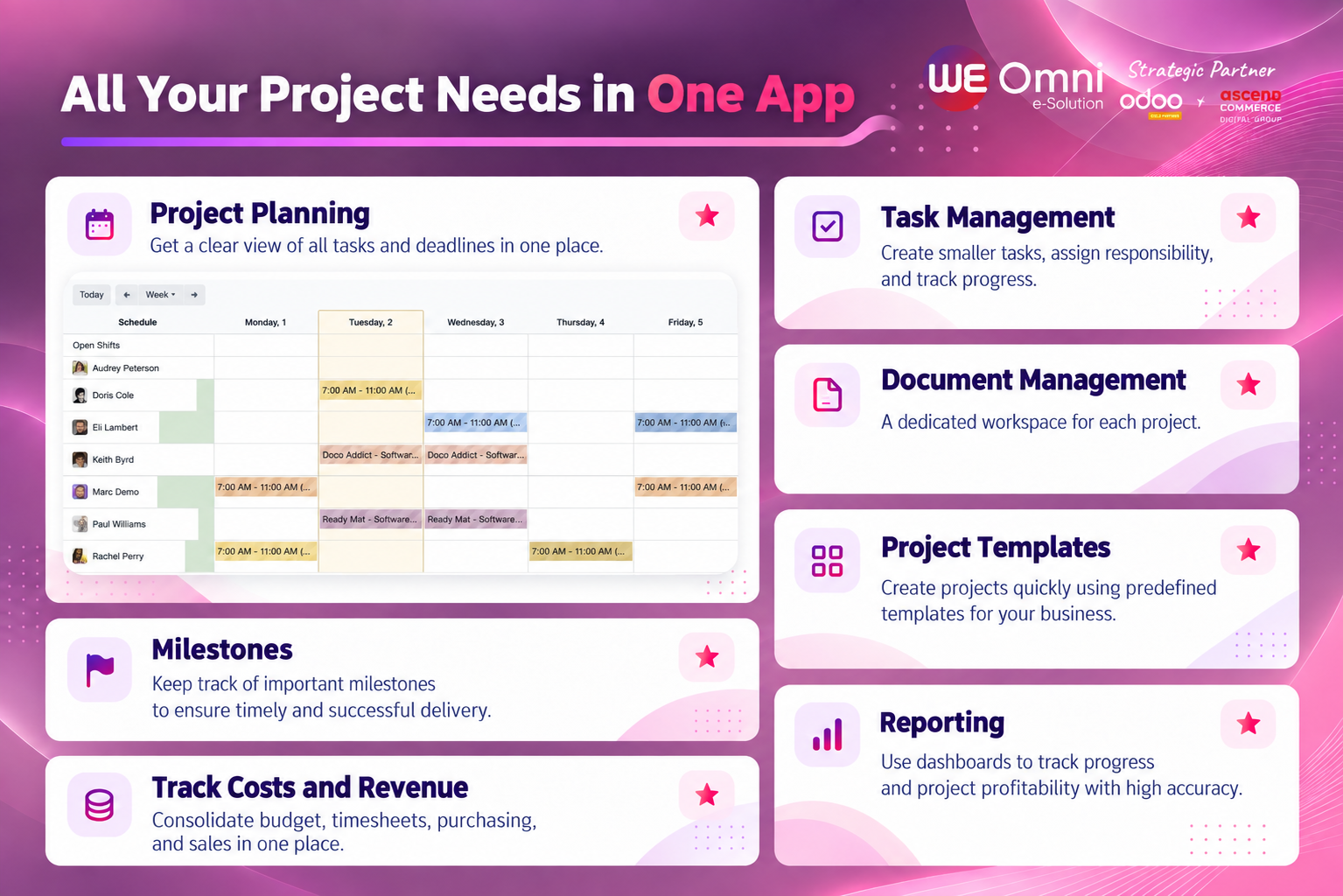
 Ready to make project management simpler and deliver tangible results? Speak with the WeOmni team for a consultation at https://weomni.com/odoo/.